
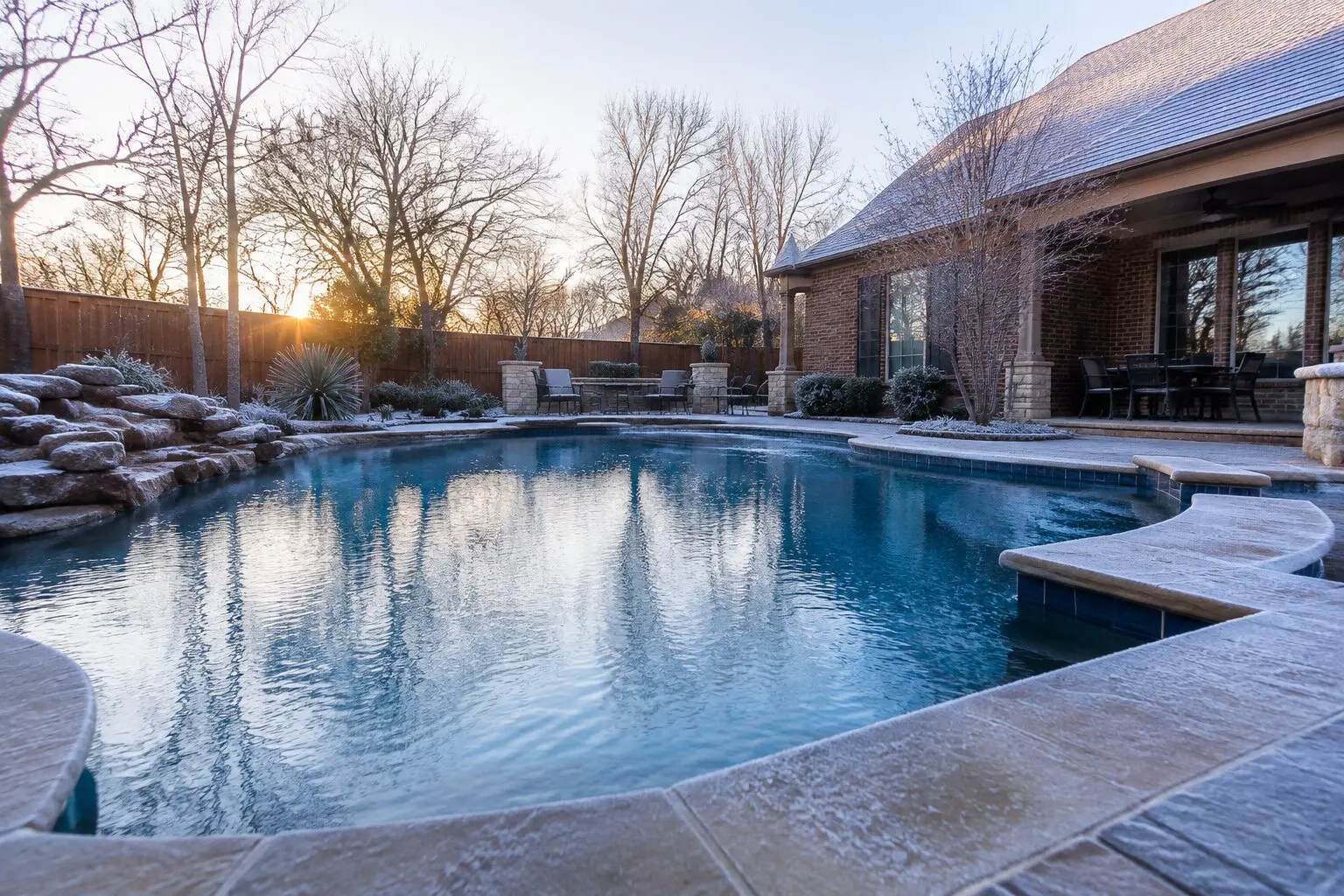
The quick answer
Freeze protection depends on working circulation, adequate water level and undisturbed plumbing. After a hard freeze, inspect equipment for cracks and leaks.
Prepare before temperatures fall
Confirm freeze-protection settings, normal pump operation, clear baskets and adequate water level. Know breaker and valve locations.
Keep water moving when possible
Moving water is less likely to freeze in exposed plumbing. Do not turn off a normally functioning system unless qualified guidance says otherwise.
If power is lost
The correct response depends on plumbing and equipment. Avoid forcing frozen valves or starting a pump with frozen lines.
Inspect after thawing
Check pump housings, filter tanks, lids, gauges, heaters, valves and exposed pipes. Stop operation if the pump cannot prime or water escapes.
Weather events and weekly service
Routine visits help prepare the pool, but an extreme freeze can require special inspections outside the normal schedule.