
The quick answer
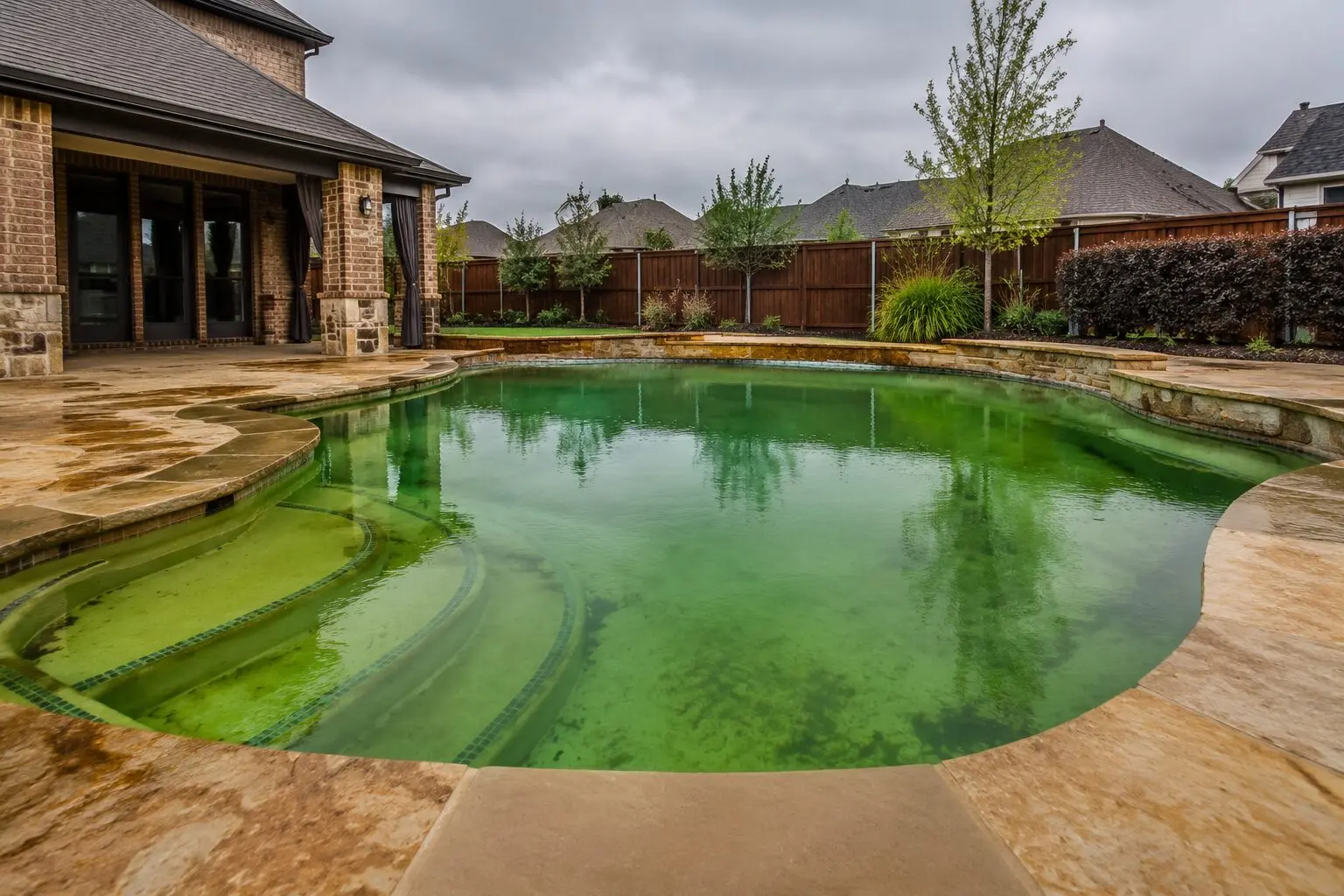
Algae gains ground when effective sanitizer, circulation or cleaning falls behind demand. Treatment must address both the growth and the condition that allowed it.
Identify affected areas
Algae often appears on shaded walls, steps, behind ladders and in low-circulation areas. Color alone is not a complete diagnosis, so water testing and physical inspection matter.
Brush and remove debris
Brushing disrupts surface growth and helps sanitizer reach it. Leaves and organic material should be removed so treatment is not consumed by avoidable demand.
Maintain effective sanitizer
The required sanitizer level depends partly on stabilizer and current demand. A chlorine reading by itself does not prove the water is adequately protected.
Support the filter
Dead algae and fine material must leave the water through filtration or controlled vacuuming. Pressure and return flow should be watched through recovery.
Prevent recurrence
Consistent weekly service, adequate circulation and early action after storms or heavy use reduce risk. Persistent growth may point to hidden flow or filtration problems.