
The short answer
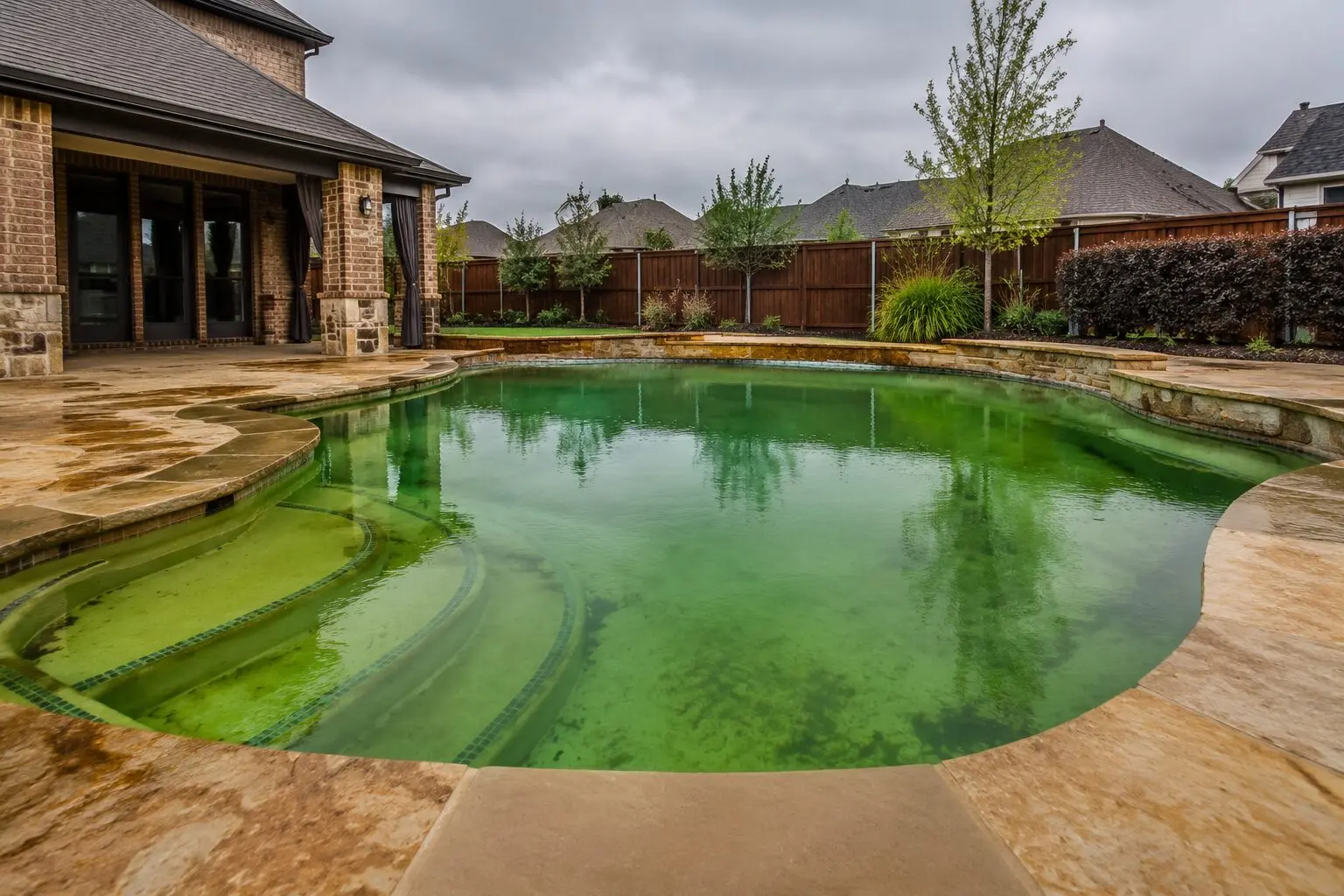
Cloudy water usually means fine particles are suspended or the pool is not sanitizing and filtering effectively. Common causes include low sanitizer, imbalanced pH, early algae, a dirty filter, short circulation time, storm debris or several conditions at once.
Decide whether swimming is safe
Do not swim when the main drain or deepest part cannot be seen clearly. Reduced visibility is a safety issue, not only a cosmetic one. Keep people out until the water is clear enough to see the pool floor and testing shows it is properly sanitized.
Test before treating
Check sanitizer and pH first, then evaluate alkalinity, stabilizer and other balance factors that apply. A chemical added for the wrong cause can complicate the problem. Record results so follow-up testing shows whether conditions are improving.
Inspect circulation and filtration
Clear skimmer and pump baskets, verify adequate water level and look for normal return flow. Compare filter pressure with the clean baseline. A dirty filter, clogged basket or air entering the system can keep fine material in suspension.
Consider recent weather and use
North Texas wind and thunderstorms can add soil, pollen and organic debris. Heavy swimming adds sunscreen and body oils. Brush the pool, remove debris and allow the filtration system to work while monitoring the water.
Prevent recurring cloudiness
Consistent weekly testing, cleaning and equipment observation work better than waiting for the pool to look wrong. If cloudiness returns after each treatment, an unresolved circulation, filtration or balance problem may need closer evaluation.
Frequently asked questions
Can I swim in a cloudy pool?
Do not swim if you cannot clearly see the deepest part and main drain. Poor visibility is a drowning risk and may indicate inadequate sanitation.
Will running the filter clear cloudy water?
Filtration can help when the system operates correctly, but it will not correct low sanitizer, early algae or a major chemistry problem by itself.